The Playbook
Formula 1,
Explained
for Rookies
From 230mph speeds to 826 million fans, discover why Formula 1 is the world's most expensive science experiment disguised as entertainment.
Everyone's talking about F1 these days. Let's dive in.
Formula 1's global fanbase grew by 12% in 2024 alone, reaching over 826 million fans worldwide. The Netflix series "Drive to Survive" transformed casual viewers into passionate followers, but there's so much more beneath the surface. This guide breaks down everything you need to understand the world's most technologically advanced racing series.
What is F1?
Formula 1 is the highest class of international single-seater racing, sanctioned by the FIA (Fédération Internationale de l'Automobile). The "Formula" refers to the strict set of rules governing car design, and "1" signifies it's the pinnacle tier.
Ten teams field 20 drivers who compete across 24 races spanning five continents, from the streets of Monaco to the night lights of Singapore and the desert heat of Bahrain.
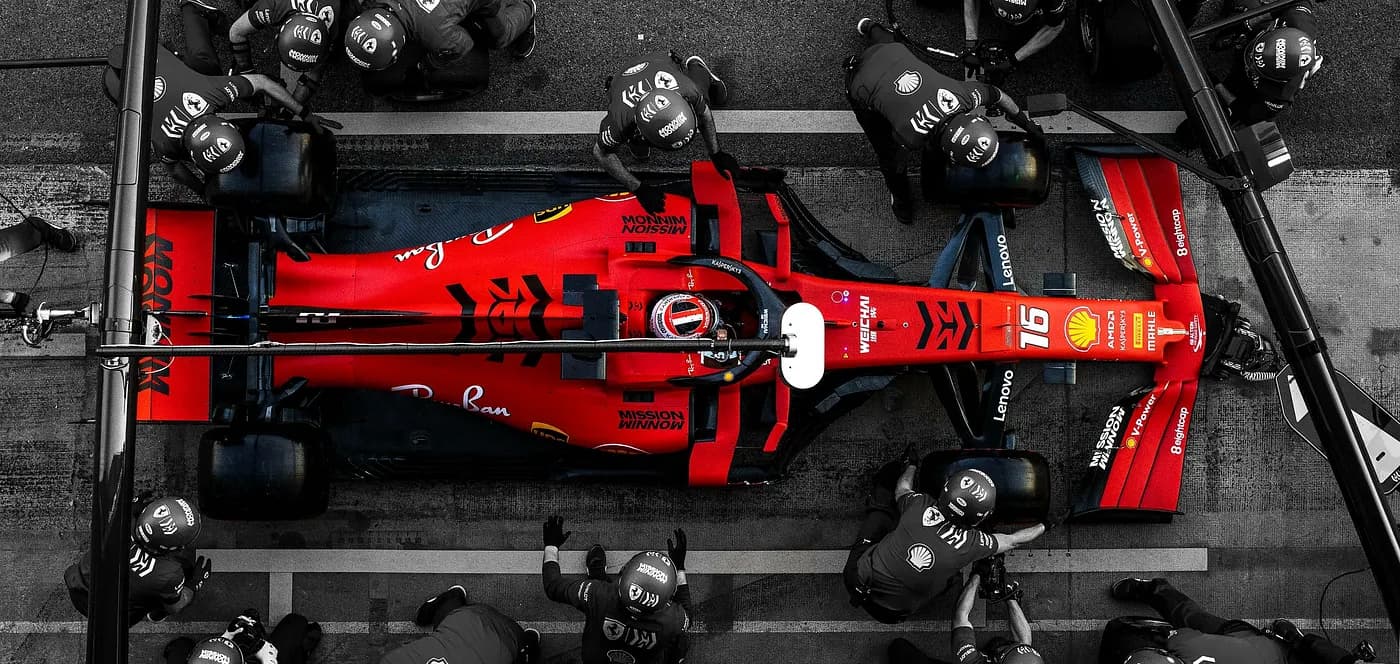
How F1 compares to other racing series
3,200 lbs
NASCAR
Stock cars with enclosed cockpits racing primarily on oval tracks at up to 200 mph. Cars weigh 3,200 lbs and use 358 cubic-inch V8 engines.
240 mph
IndyCar
Open-wheel cars hitting 240 mph at Indianapolis. All teams use the same Dallara chassis, making driver skill the main differentiator.
1,000+ HP
Formula 1
Each team designs their own car from scratch. 1.6L turbo V6 hybrids producing 1,000+ horsepower in cars weighing just 1,760 lbs.
What makes F1 unique
F1 teams are called "constructors" because they design and build their own chassis, aerodynamics, and integrate their power units, unlike any other major racing series.
Teams bring upgrades every few races, constantly developing new components. A car in March can be radically different by September.
F1 is as much an engineering competition as it is a driver competition.
F1 by the numbers
The scale and precision of Formula 1 is staggering. Every detail is optimized, every millisecond counts.
0
MPH Top Speed
0G
Cornering Force
0.0s
Pit Stop Record
0+
Sensors Per Car
The global explosion
In 2024, F1 set seven viewership records across different races. The Miami Grand Prix became the most-watched race in US history with 3.1 million viewers.
Total season attendance reached 6.5 million fans across race weekends. The British Grand Prix at Silverstone drew 480,000 spectators over four days alone.
US viewership has doubled since 2018.

F1's revenue exceeded $3.6 billion in 2024, including a landmark 10-year partnership with LVMH worth $1.5 billion. The sport has never been more commercially successful.
The race weekend
Three days of action, each with its own intensity
Friday
Practice Sessions
Two 60-minute practice sessions where teams fine-tune car setups and gather crucial tire and fuel data.
Saturday
Qualifying
Three knockout rounds (Q1, Q2, Q3) lasting 18, 15, and 12 minutes. Fastest lap in Q3 earns pole position.
Sunday
Grand Prix
The main event covering at least 305km. Strategy, tire management, and split-second decisions determine the winner.
Points & Championships
Points System
Finish outside the top ten? No points for you!
Two Championships
Drivers' Championship
Individual drivers compete for the most points across the season to become World Champion.
Constructors' Championship
Teams (constructors) combine both drivers' points to compete for the team title.
"Box, box, box!"
"Copy. Switching to Plan B."
— Typical team radio during a pit strategy call
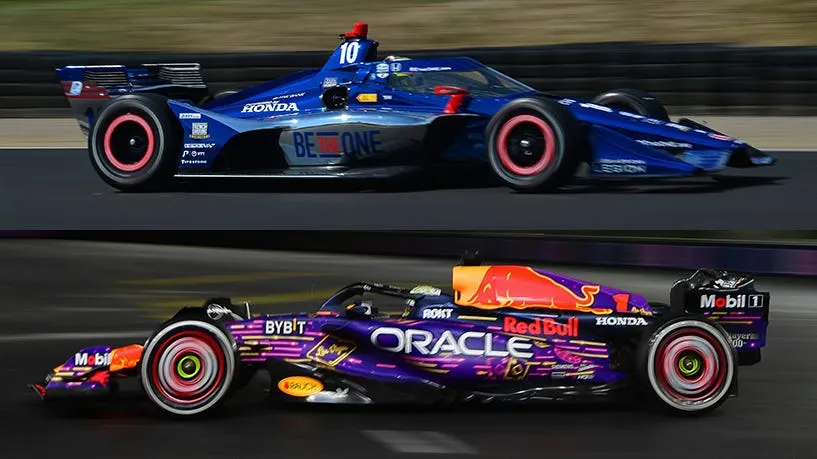
Strategy plays a massive role in F1. When to pit, which tire compound to use, how to manage fuel and battery deployment: these decisions can win or lose races by seconds.
The science of downforce
At 150 km/h, an F1 car generates downforce equal to its own weight. At top speed, that force reaches 2-3 times the car's mass, essentially gluing it to the track.
Since 2022, ground effect aerodynamics generate 60% of the downforce. The floor creates a low-pressure zone underneath using Venturi tunnels, the same physics that makes airplane wings work, but inverted.
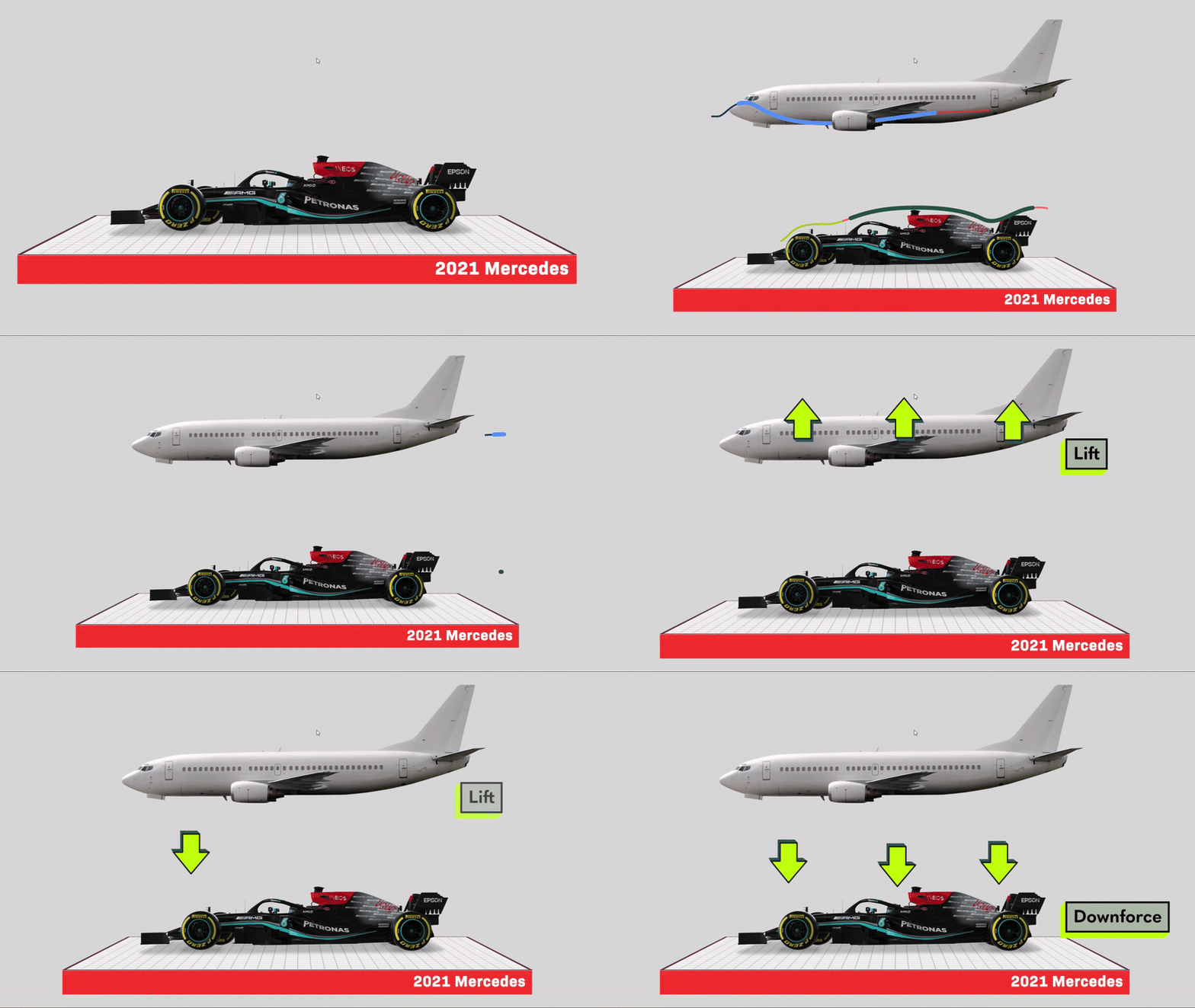
The relationship between speed and downforce is squared: double the speed, and downforce increases by four times. This allows drivers to take corners at speeds that would be physically impossible in any road car.
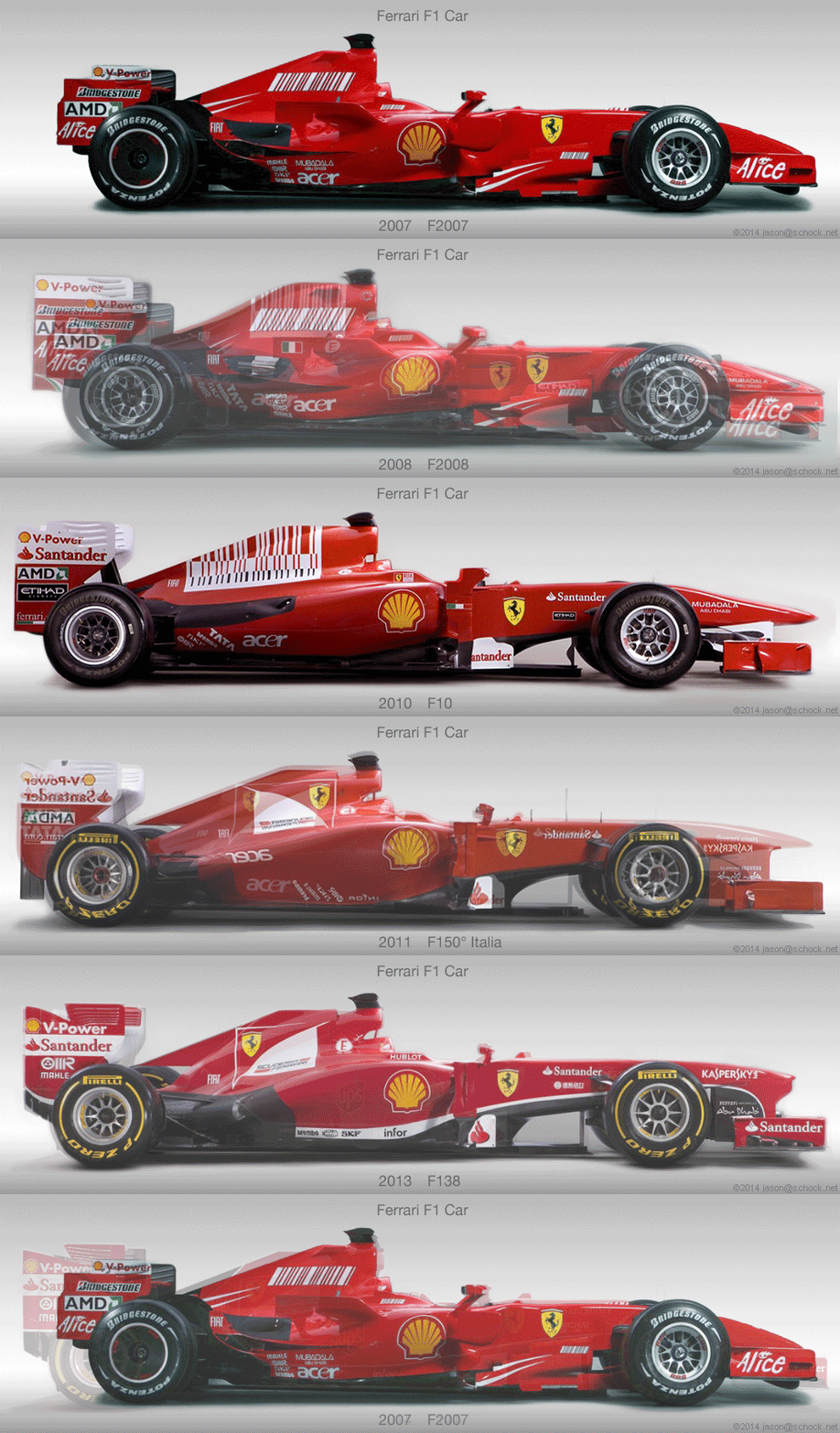
DRS (Drag Reduction System) opens a flap in the rear wing, reducing drag and adding up to 10-12 km/h on straights. It's only usable in designated zones when within one second of the car ahead.
Teams constantly balance downforce vs. drag. High-downforce setups for Monaco differ drastically from low-drag configurations used at Monza's long straights.
F1 cars could theoretically drive upside down on a ceiling at high enough speeds.
The cost cap era
F1 introduced spending limits in 2021 to level the playing field
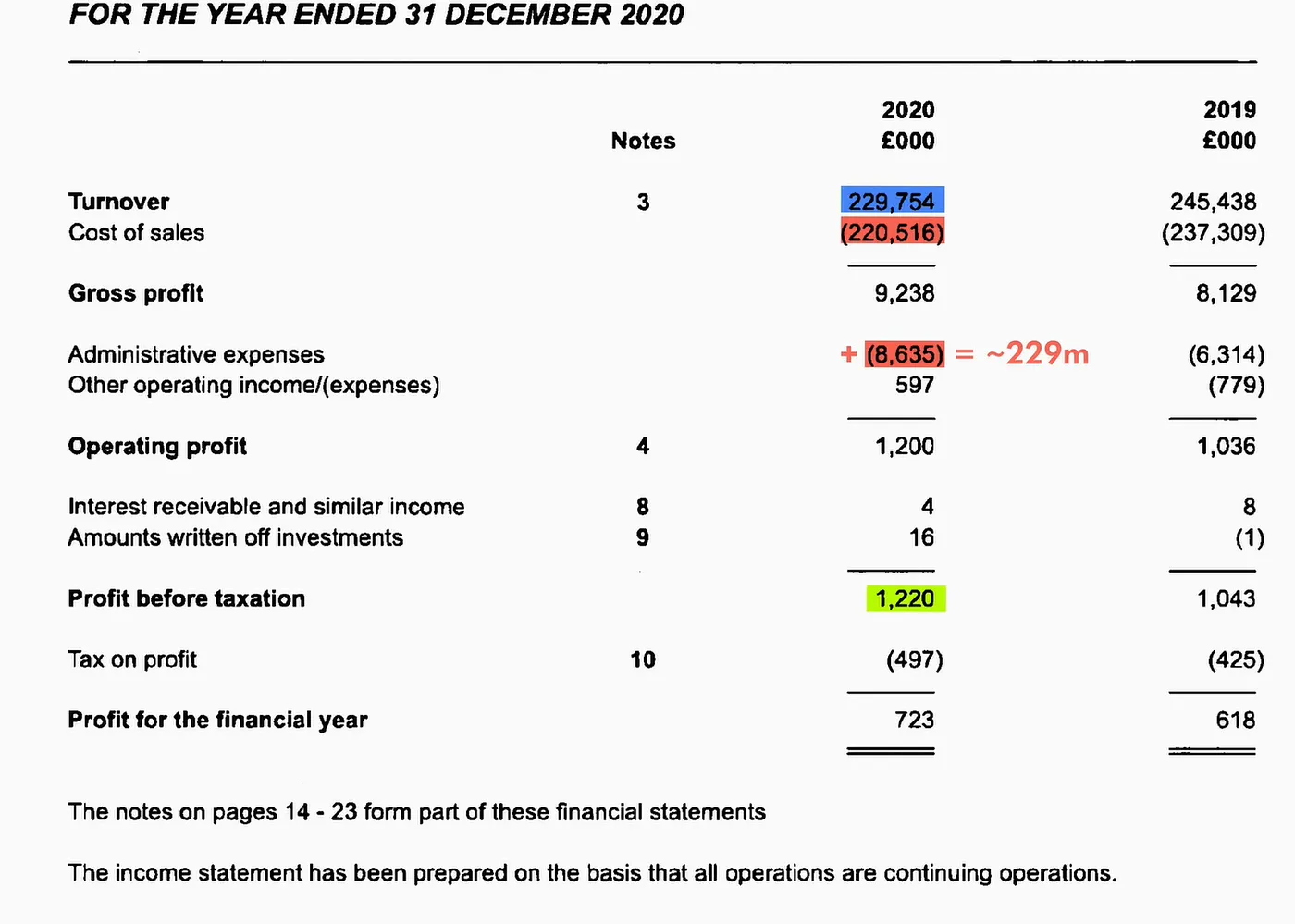
The 2025 cost cap sits at $140.4 million, a base of $135 million plus $1.8 million per race above 21. This covers car development, race operations, and most team expenses.
Driver salaries, top three executive salaries, and marketing are notably excluded from the cap.
In 2021, Red Bull exceeded the cap by $2.6 million. The penalty: a $7 million fine and 10% reduction in aerodynamic testing time. The FIA confirmed all teams complied in 2024, though Aston Martin received a minor procedural breach notice.
The 2026 regulations will raise the cap to $215 million, a 30% increase to support new power unit development.
Power unit manufacturers also face their own cap: $95 million through 2025, rising to $130 million in 2026 for the new hybrid engines.
The hybrid power unit
F1's 1.6L turbo V6 hybrid is the most efficient engine ever built
Since 2014, F1 has used turbocharged 1.6-liter V6 engines combined with two motor generator units (MGUs). The MGU-K recovers braking energy, while the MGU-H harvests energy from exhaust gases.
Together they produce over 1,000 horsepower while achieving thermal efficiency exceeding 50%, compared to just 30-35% for typical road cars.
Energy Recovery
During a single lap, an F1 car harvests and deploys electrical energy multiple times. The battery can deploy 120kW (about 160 hp) per lap, roughly 33 seconds of boost.
In 2026, electrical power triples to 350kW (470 hp), creating a near 50/50 split between combustion and electric power.
Engine Limits
Each driver can only use three engines per season. Exceed that limit, and you take grid penalties. This forces teams to build incredibly durable power units that can run at peak performance for thousands of kilometers.
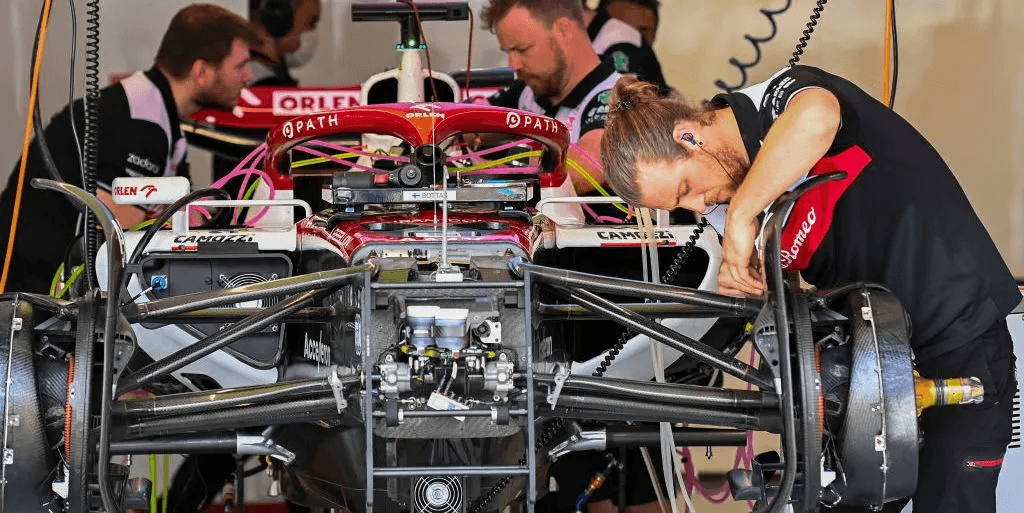
F1 power units spin at up to 15,000 RPM, with the turbo spinning at over 100,000 RPM. The precision required to build these engines is measured in microns.
Safety innovations
F1 has revolutionized motorsport safety. The Halo device, introduced in 2018, has saved multiple lives including Romain Grosjean's in his 2020 Bahrain crash where his car split in half and caught fire.
Modern F1 cars feature:
Carbon fiber survival cell
Protects drivers in impacts up to 75G
HANS device
Prevents basilar skull fractures
Biometric gloves
Monitor driver vital signs in real-time
Fire-resistant suits
Withstand flames for 11+ seconds
F1 safety innovations regularly transfer to road cars, from carbon fiber construction to crumple zones to advanced telemetry systems.
The 2026 revolution
2026 brings the biggest regulatory change in F1 history. Cars will run on 100% sustainable fuel derived from non-food biomass, municipal waste, or carbon capture.
The MGU-H is being removed, making power units simpler. This has attracted new manufacturers: Audi joins F1 as a full constructor, while Ford partners with Red Bull.
Active aerodynamics will debut, with adjustable front and rear wings.
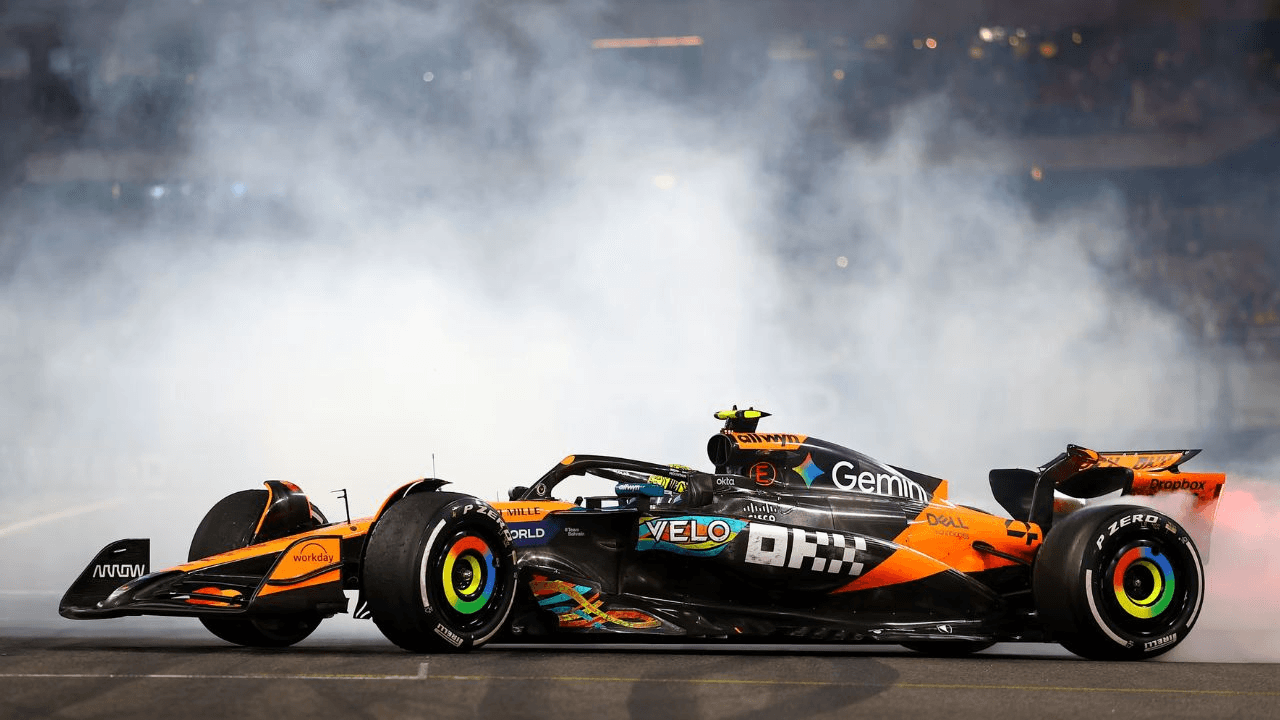
F1 aims to be net zero carbon by 2030. The sustainable fuels being developed for F1 are already being tested in Formula 2 and Formula 3, with all 52 cars running on 100% sustainable fuel since 2023.
Ready to watch?
You now understand the basics of F1: the technology, the strategy, the stakes. Time to experience it live.
The 2025 season features 24 races across the globe. Whether it's the glamour of Monaco, the speed of Monza, or the spectacle of Las Vegas, each Grand Prix offers something unique.
"To finish first, you must first finish."
— Juan Manuel Fangio, 5-time World Champion
The Machine
Explore the engineering marvel that is an F1 car
Sources & Media: Formula1.com, FIA, Mercedes-AMG Petronas F1, McLaren, ESPN, Nielsen Sports, Motorsport.com, F1Chronicle, BlackBook Motorsport, Getty Images